 |
 |
 |
 |
 |
 |
 |
Generation Four
Super Nintendo Entertainment System
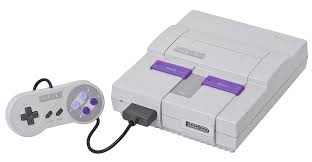
The Super Nintendo Entertainment System (officially abbreviated the Super NES or SNES and incorrectly shortened to Super Nintendo is a 16-bit home video game console developed by Nintendo that was released in 1990 in Japan and South Kore
a, 1991 in North America, 1992 in Europe and Australasia (Oceania), and 1993 in South America. In Japan, the system is called the Super Famicom (Japanese: スーパーファミコン Hepburn: Sūpā Famikon, officially adopting the abbreviated name of its predecessor, the Famicom), or SFC for short. In South Korea, it is known as the Super Comboy Syupeo Keomboi and was distributed by Hyundai Electronics. Although each version is essentially the same, several forms of regional lockout prevent the different versions from being compatible with one another. It was released in Brazil on September 2, 1992, by Playtronic.
The rivalry between Nintendo and Sega resulted in what has been described as one of the most notable console wars in video game history, in which Sega positioned the Genesis as the "cool" console, with more mature titles aimed at older gamers, and edgy advertisements that occasionally attacked the competition. Nintendo however, scored an early public relations advantage by securing the first console conversion of Capcom's arcade classic Street Fighter II for SNES, which took over a year to make the transition to the Genesis. Despite the Genesis's head start, much larger library of games, and lower price point, the Genesis only represented an estimated 60% of the American 16-bit console market in June 1992,and neither console could maintain a definitive lead for several years. Donkey Kong Country is said to have helped establish the SNES's market prominence in the latter years of the 16-bit generation, and for a time, maintain against the PlayStation and Saturn. According to Nintendo, the company had sold more than 20 million SNES units in the U.S. According to a 2014 Wedbush Securities report based on NPD sales data, the SNES ultimately outsold the Genesis in the U.S. market.
Sega Genesis
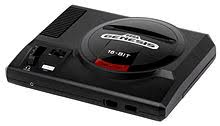
The Sega Genesis, known as the Mega Drive in regions outside of North America, is a 16-bit home video game console which was developed and sold by Sega Enterprises, Ltd. The Genesis was Sega's third console and the successor to the Master System. Sega first released the console as the Mega Drive in Japan in 1988, followed by a North American debut under the Genesis moniker in 1989. In 1990, the console was distributed as the Mega Drive by Virgin Mastertronic in Europe, by Ozisoft in Australasia, and by Tectoy in Brazil. In South Korea, the systems were distributed by Samsung and were known as the Super Gameboy, and later the Super Aladdin Boy.
Designed by an R&D team supervised by Hideki Sato and Masami Ishikawa, the hardware was adapted from Sega's System 16 arcade board, centred on a Motorola 68000 processor as a primary CPU and a Zilog Z80 as a secondary processor. The system supports a library of more than 900 games created both by Sega and a wide array of third-party publishers and delivered on ROM-based cartridges. It can play Master System games when the separately sold Power Base Converter is inserted. The Genesis has benefited from several peripherals and network services, as well as multiple first-party and third-party variations of the console that focus on extending its functionality.
 |
|